GMRS is the two-way radio for a household: one $35 licence, no exam, covers the whole family for ten years, 5-watt handhelds and 50-watt mobiles, and repeaters in most cities. Five handhelds and two mobiles, and the rules that make them legal.
GMRS, FRS and the aisle they share
The blister-pack walkie-talkies and the GMRS radios use the same 22 channels. The differences are power, antennas, repeaters and the licence. The GMRS guide has the rules with their citations.
No licence, 2 W, fixed antenna
FRS
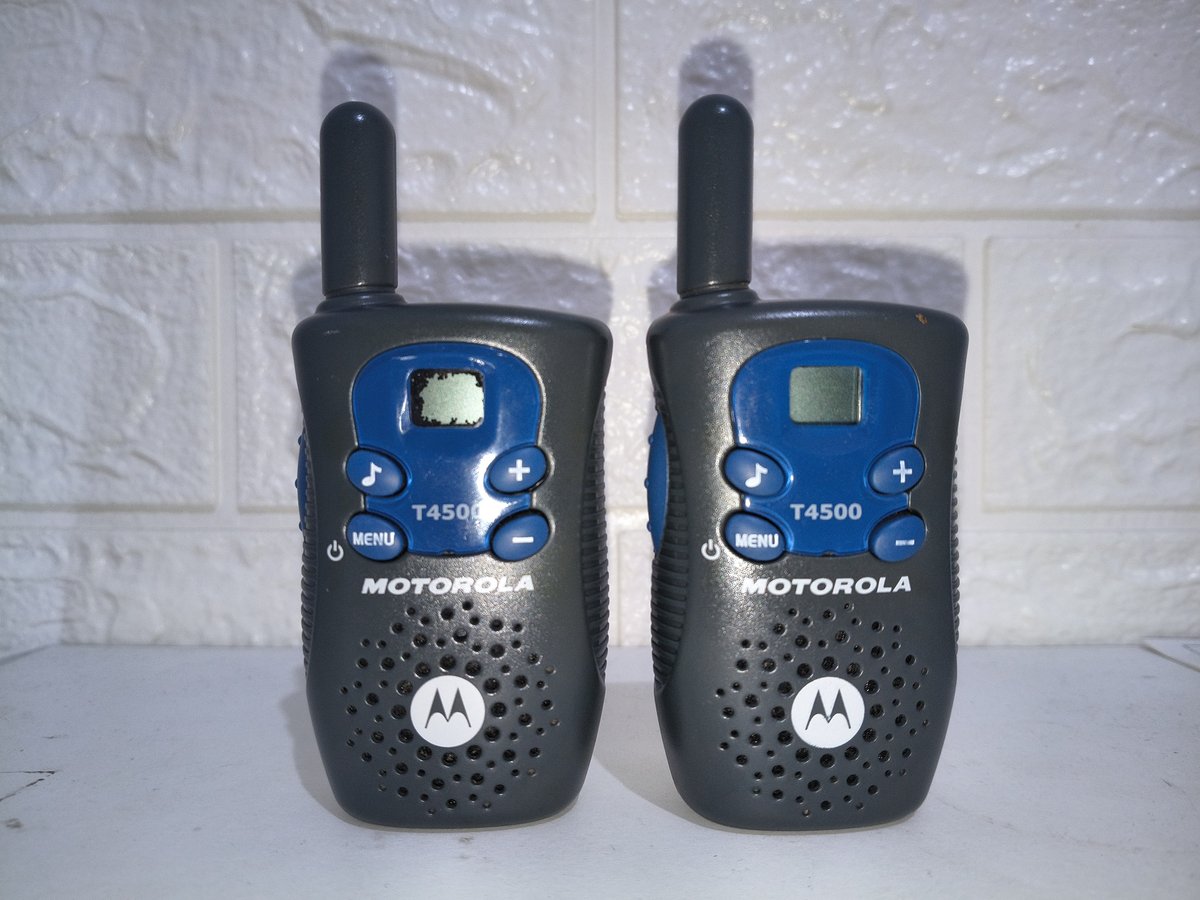
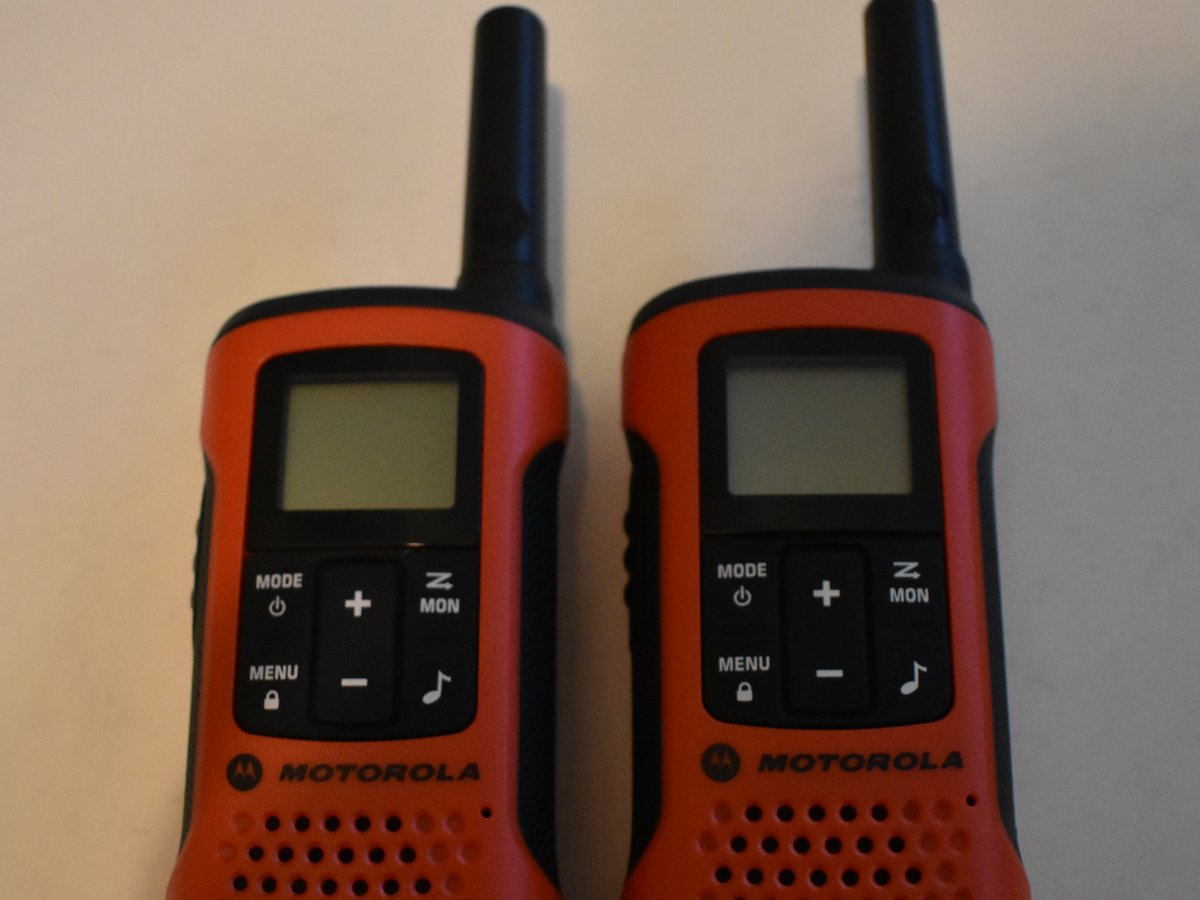
The walkie-talkies in the sporting-goods aisle. Two watts on most channels, half a watt on 8–14, the antenna can't be changed. Fine across a campground.
$35, no exam, 10 years, whole family
GMRS
Same channels, more power, removable antennas, repeaters. One licence covers your spouse, kids, parents, siblings and in-laws (47 CFR 95.1705).
Handheld 5 W, mobile 50 W
Power
The rule caps the main channels at 50 W for mobiles and bases and the 462 interstitial channels at 5 W; handhelds sit at 5 W as a product norm.
467 MHz inputs
Repeaters
A repeater on a tower turns a 5-watt handheld into a county-wide radio. Eight channels are reserved for them; a "repeater capable" radio can use them.
Quick picks
The short answer for common situations. Each links to the full card below.
Fifty watts with every control on the mic; the radio body hides under the seat.
Compare the seven
Power, channels and batteries from each maker's page where published, otherwise from the listing. Every radio here is a GMRS radio; the two BTECH units carry the maker's own statement of Part 95E certification, Midland and Rocky Talkie don't print theirs on the product page.
Product links on this page go to Amazon. If you buy through them, Your First Radio earns a commission. How we pick and earn
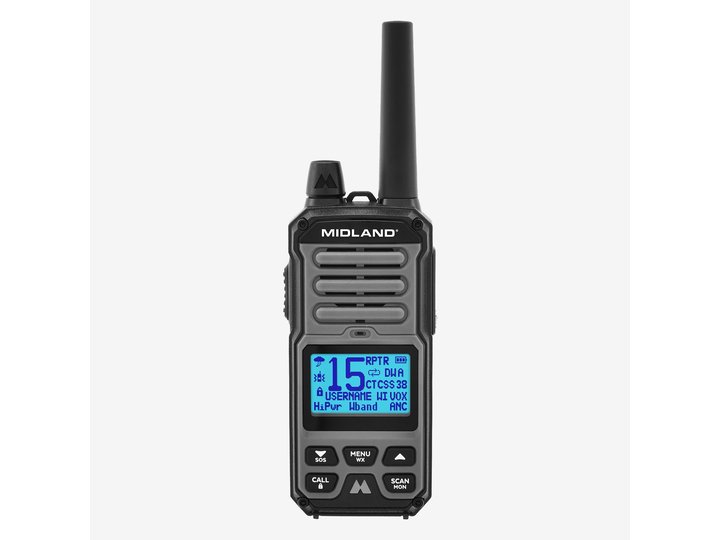
Midland's current GMRS handheld: 5 watts, the 22 standard channels plus 8 repeater channels, an IP67 case, NOAA weather alerts and USB-C charging, built to be handed to someone who has never used a radio.
Power
5 W
Channels
22 GMRS/FRS + 8 repeater
Rating
IP67
Charging
USB-C compatible, about 4 h
Weather
NOAA alert
Weight
9.6 oz (listing)
Suits: The family radio: a parent, a teenager, a hunting partner, a hurricane kit.
Weigh: Midland doesn't publish the battery capacity or the certification number on the product page. No Bluetooth or app; programming the repeater tones takes a separate cable or the keypad.
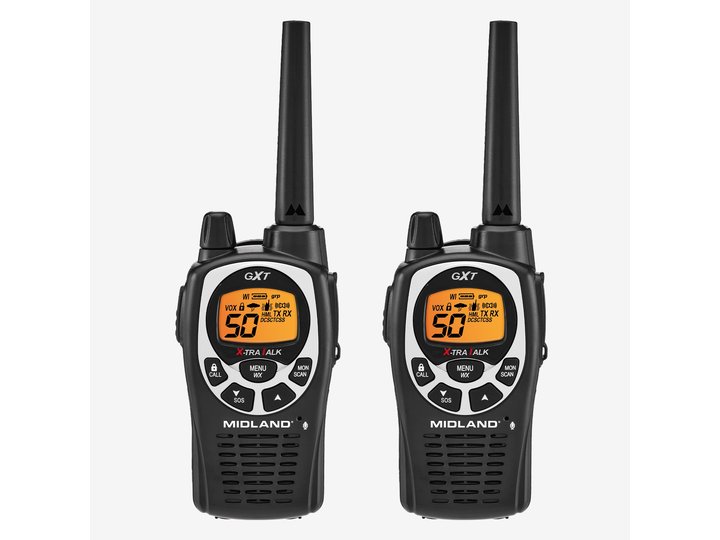
The two-way radio that has been in glove boxes for a decade: 22 channels plus 28 extra, 142 privacy codes, NOAA scan, and it runs on the rechargeable pack or on three AAs when the pack is dead.
Channels
22 + 28 extra; 142 privacy codes
Power
Not published
Batteries
Rechargeable pack or 3 × AA
Rating
JIS4 splash
Weather
NOAA scan and alert
Size
2.44 × 7.91 × 1.52 in
Suits: A kit radio that must work after a year in a drawer, and anyone who wants AA backup.
Weigh: Midland's "36 mile range" is a line-of-sight claim; its own page says to expect half a mile to two miles in normal conditions. No repeater capability stated, no published power output, splash-rated (JIS4) rather than waterproof.
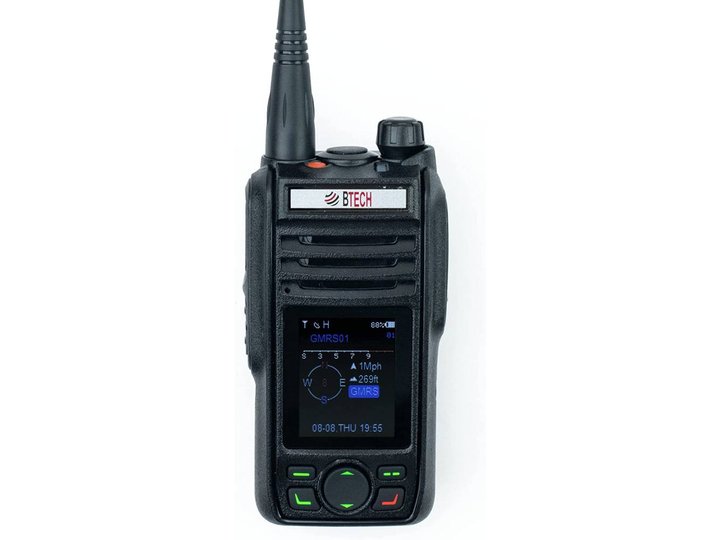
A GMRS handheld with the features of a modern ham radio: GPS position sharing and off-grid text between radios, Bluetooth audio, app setup, 180 channels, IP67, a 2,600 mAh USB-C battery, and a receiver that scans the ham and weather bands.
Power
1 / 3 / 5 W
Channels
180 (6 banks × 30), repeater capable
Battery
2,600 mAh, USB-C
Rating
IP67; 11 oz
Extras
GPS, Bluetooth, text, NOAA, wide-band receive
Licence
GMRS (no exam)
Suits: A family or a group that wants location sharing without a phone signal, and a GMRS user who may get a ham licence later.
Weigh: Setup lives in the phone app. Reviewers note the radio wants a USB-A-to-C cable for charging. A GMRS licence is required, which the maker says plainly.
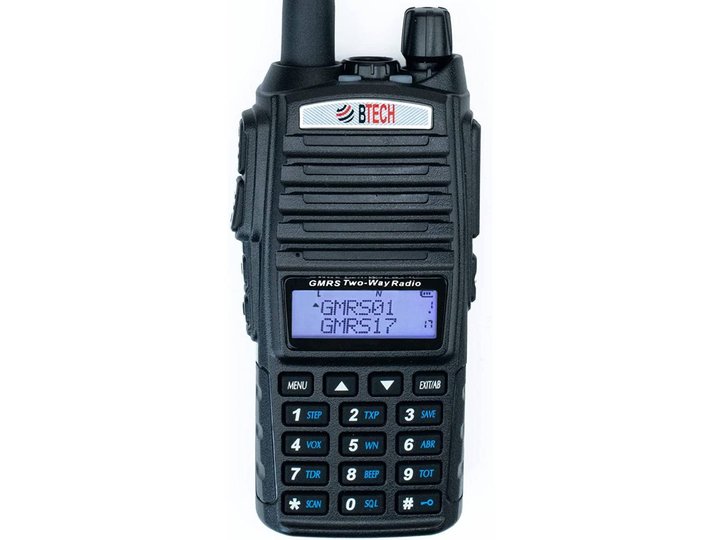
A UV-5R-shaped handheld with firmware locked to GMRS: 5 watts, 200 channels, repeater capable, USB-C and desk charging, NOAA, and a wide receiver for listening to ham and public-safety frequencies. The maker states Part 95E compliance.
Power
0.5 / 5 W (8–14 low only)
Channels
200, repeater capable
Battery
1,800 mAh BL-8, USB-C + desk charger
Receive
65–108 / 136–174 / 400–520 MHz
Rating
IP54; 214 g; 58 × 110 × 32 mm
Certification
Part 95E (maker statement)
Suits: The person who wants the Baofeng price and layout for GMRS, legally.
Weigh: IP54 splash rating rather than IP67. Channels 8 to 14 are locked to low power, as the rule requires. The FCC ID isn't printed on the maker's page.
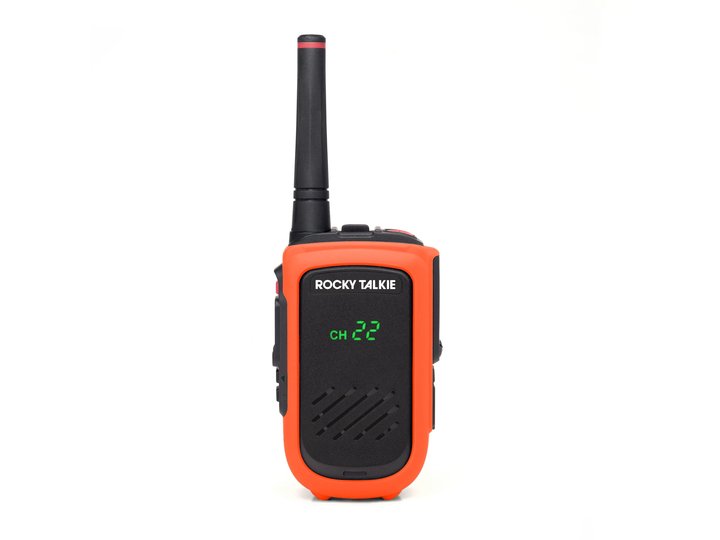
A GMRS handheld built for climbers and ski patrol: 5 watts, the 22 channels and nothing else, IP67, a leash and a lanyard, a hand mic in the box, and a battery that is rated for cold.
Power
5 W
Channels
22, repeater capable
Battery
1,800 mAh, 7.4 V, USB-C
Rating
IP67; 9.1 oz
Size
10.3 × 6.2 × 3.4 cm
In the box
Hand mic, leash, lanyard
Suits: Outdoor use where the radio gets dropped and wet, and anyone who wants a radio with no menus to learn.
Weigh: Twenty-two channels with repeater capability and no custom memories, which is the point and also the limit. Premium price for a GMRS handheld. Display details and the FCC ID aren't published.
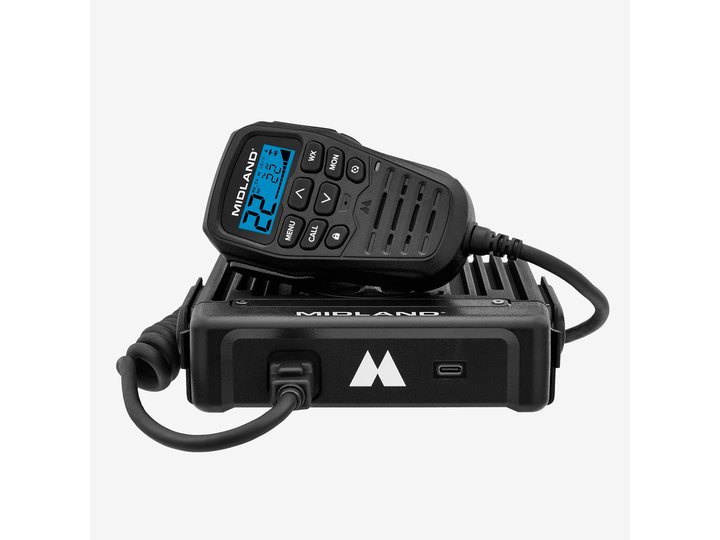
A 50-watt GMRS mobile with every control on the microphone, so the radio body hides under a seat: 15 high-power channels, 8 repeater channels with split tones, NOAA, and a magnet-mount antenna in the box.
Power
50 W
Channels
15 high-power + 8 repeater (split tone)
Control
All on the mic, USB-C mic connector
Size
5.5 × 1.5 × 7.3 in
Weather
NOAA scan and alert
In the box
Unity-gain magnet-mount antenna
Suits: A truck or an overland convoy, and the base station end of a family GMRS setup with a better antenna.
Weigh: The included antenna is a unity-gain starter; a proper mount and antenna is the first upgrade. Midland doesn't publish the current draw or the FCC ID on the page. Variants with bigger antennas are separate listings.
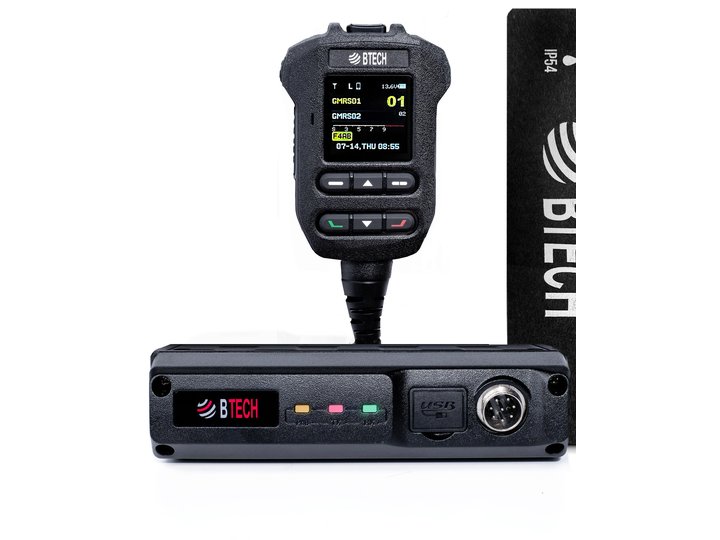
A 50-watt GMRS mobile with a colour control mic, GPS, Bluetooth and app setup, 180 channels, and the power steps the rule requires (5 W on channels 1–7, receive only on 8–14, full power on 15–30). Part 95E certified per the maker.
Power
5 / 25 / 50 W
Channels
180, repeater capable
Control
Colour mic, GPS, Bluetooth, app
Rating
IP54; 2.5 lb; 5.5 × 1.8 × 6 in
Weather
NOAA
Certification
Part 95E (maker statement)
Suits: A vehicle or base radio for a group that already uses the GMRS-PRO handhelds.
Weigh: App-dependent setup, as with its handheld sibling. Current draw and the FCC ID aren't published; IP54, so keep it inside the cab.
When the cell network goes down after a storm, a pair of GMRS handhelds keeps a household in touch across a neighbourhood, and a mobile on the truck reaches across town. Keep them charged, keep a USB-C cable in the kit, and learn the repeater channels in your area before the season; RepeaterBook lists GMRS repeaters by state. Pair them with a weather radio from the personal radio page for the alerts themselves.
One warning: a ham handheld that "does GMRS" in its menu is not a GMRS radio. The rule (47 CFR 95.1761) says a GMRS transmitter can't be certified if it also operates on ham frequencies, and an uncertified transmitter voids your authority to use it. Buy a radio sold as GMRS.