Personal radio: walkie-talkies, CB, MURS, weather radios and scanners
Most people who search for 'a radio' don't need a licence or an exam. They need walkie-talkies for a trip, a CB for the truck, a weather radio that wakes the house, or something to listen to what's on the air. Fifteen of them, with the rule that governs each.
Five things called a radio
None needs a licence under Part 95 (47 CFR 95.305), except the scanners and SDRs, which only listen and need nothing at all. Which one you need depends on who you're talking to.
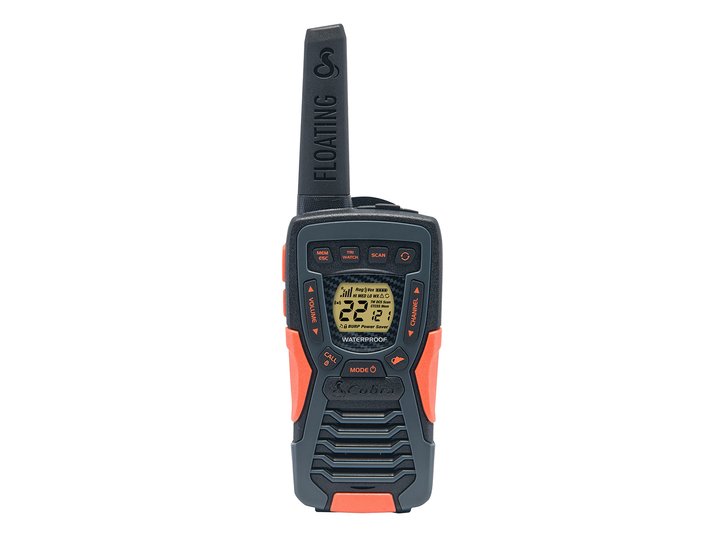
22 channels, 2 W, fixed antenna
FRS walkie-talkies
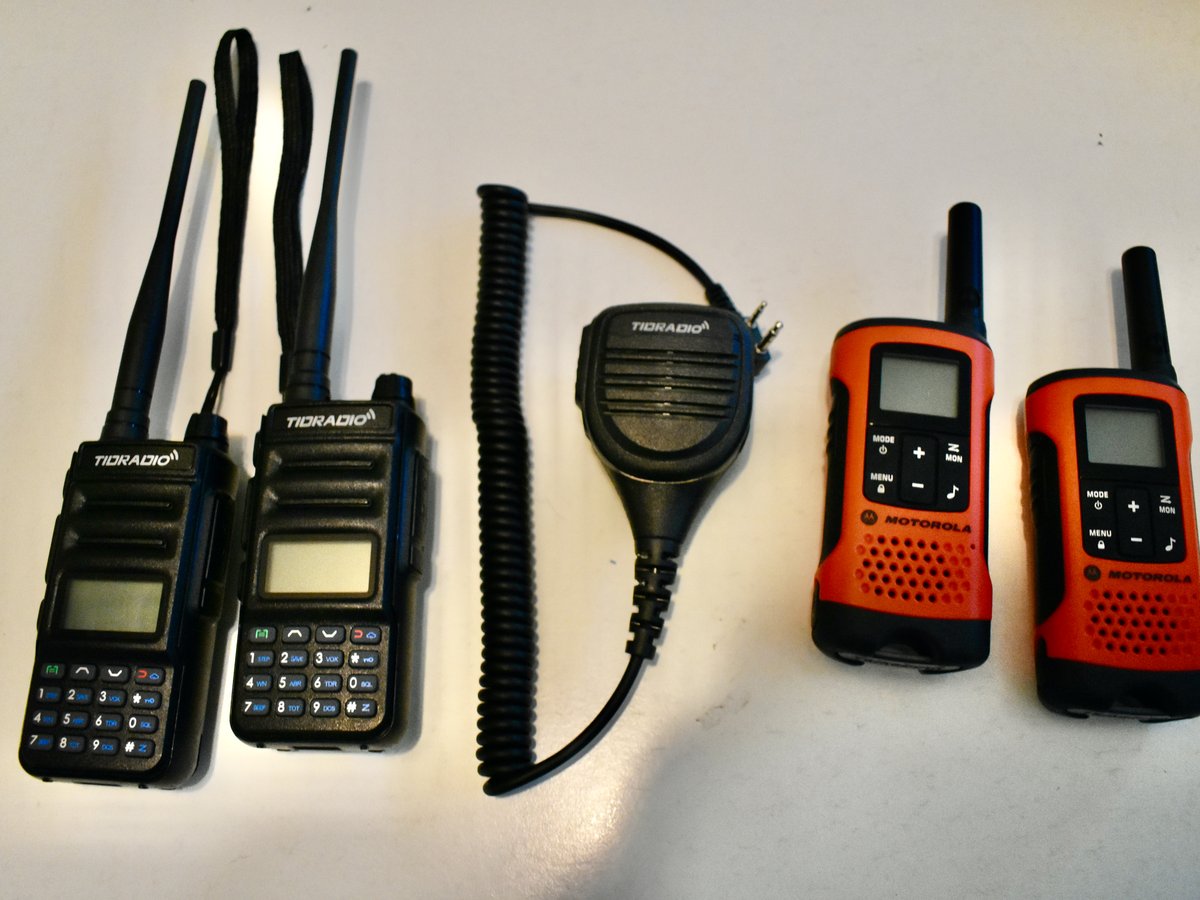
The blister-pack pairs. They share channels with GMRS and reach a mile or two. If you want more, that's GMRS and a $35 licence.
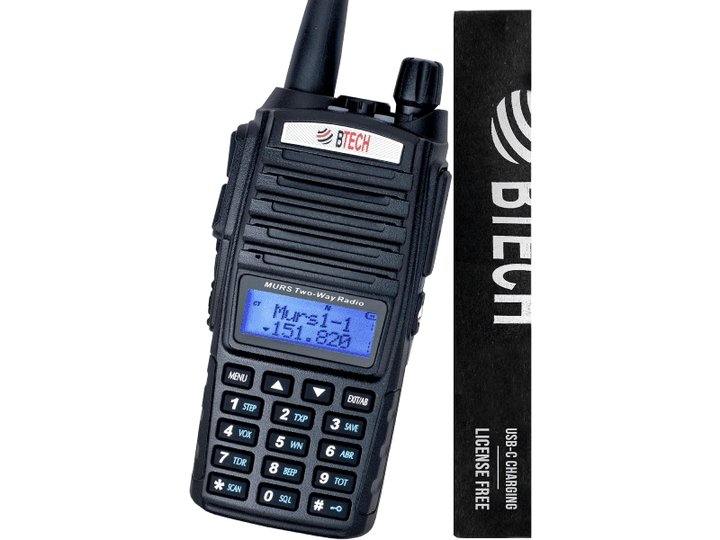
5 VHF channels, 2 W
MURS
VHF with no licence, which carries through woods and over terrain better than the UHF walkie-talkies. Five channels and a small crowd.
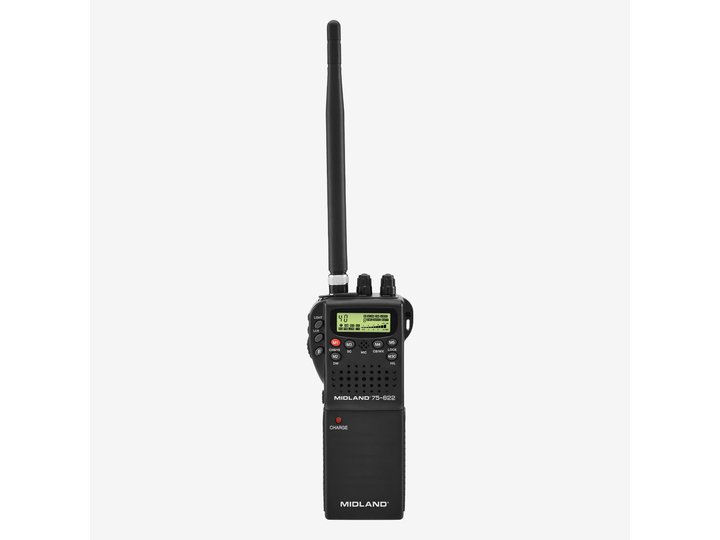
40 channels, 4 W AM/FM
CB
The truckers' band at 27 MHz. Needs a tuned antenna; reaches a few miles, and across the country when the sun cooperates.
7 channels at 162 MHz
Weather radio
Receive only. A SAME-equipped alert radio stays silent until the Weather Service warns your county, then sounds the siren.
Receive only
Scanners and SDR
Hear public safety, aircraft, ham repeaters and weather. A scanner does it in your hand; an SDR dongle does it on a laptop for a tenth of the price.
Quick picks
The short answer for common situations. Each links to the full card below.
Follows the P25 trunked systems most departments use; check your county on RadioReference first.
Compare the fifteen
Specs from each maker's page where published, otherwise from the listing. FRS makers don't print transmit power; the 2 W and 0.5 W figures are the rule's limits (47 CFR 95.567). Range claims on the boxes are line-of-sight; every maker footnotes half a mile to two in a neighbourhood, and that is the number to plan on.
Product links on this page go to Amazon. If you buy through them, Your First Radio earns a commission. How we pick and earn
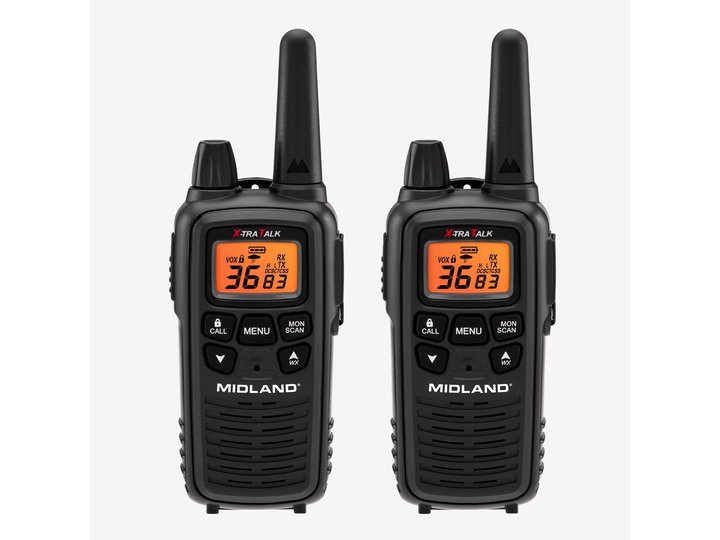
The basic pair: 22 FRS channels plus 14 extra, 121 privacy codes, NOAA weather scan, and they run on the included packs or three AAAs. No licence, no setup.
Service
FRS (Part 95 subpart B), no licence
Channels
22 + 14 extra; 121 privacy codes
Power
FRS limit: 2 W, 0.5 W on 8–14
Batteries
Included pack or 3 × AAA; cradle
Weather
NOAA scan and alert
Size
2.19 × 6.09 × 1.27 in
Suits: Kids at a campground, two carts on a course, a house and a garage.
Weigh: Midland's "30 miles" is a line-of-sight figure; its own FAQ says to expect half a mile to a mile in normal conditions. Power, battery capacity and any water rating aren't published.
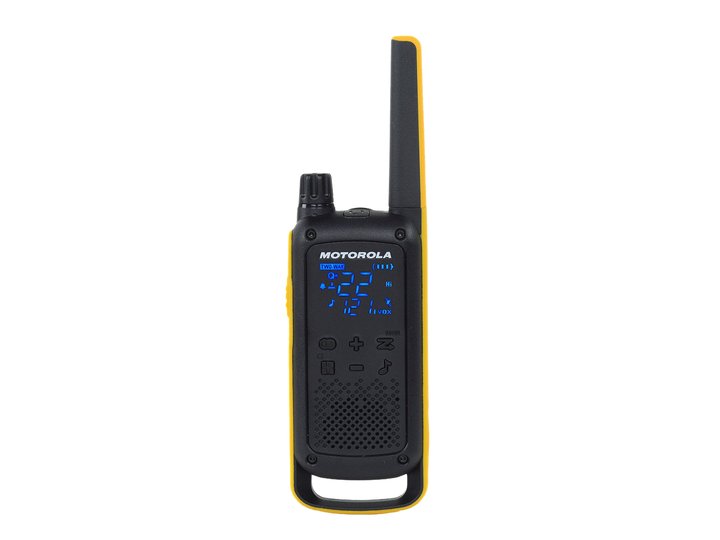
A step up in the same aisle: IPX4 weatherproof, 800 mAh NiMH packs or AAs, seven NOAA channels, a flashlight, and a Y-cable that charges both from one USB port.
Service
FRS, no licence
Channels
22; 121 privacy codes
Batteries
800 mAh NiMH or 3 × AA; micro-USB Y-cable
Rating
IPX4 weatherproof
Weather
7 NOAA channels
Weight
6.4 oz (listing)
Suits: Rain, boats, and anyone who wants a pair that charges from a phone brick.
Weigh: Motorola's "35 miles" footnotes to 6 miles on open water and 2 in a neighbourhood. Power output isn't published; the FRS rule caps it at 2 W anyway. Micro-USB, not USB-C.
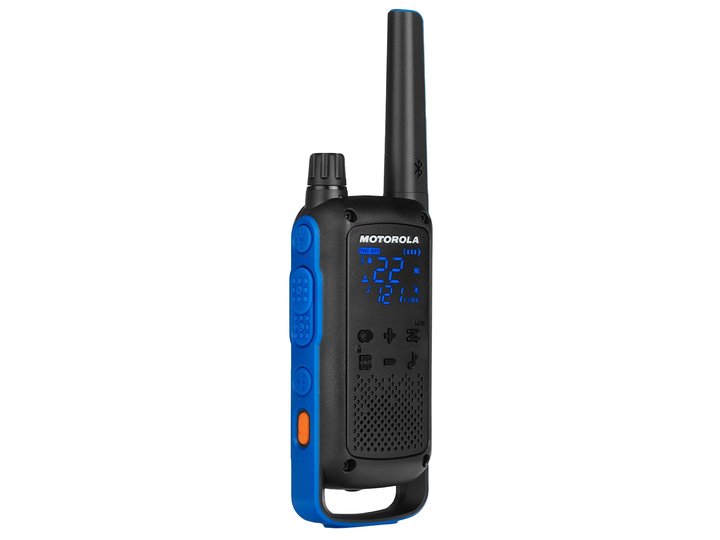
FRS radios that pair with a phone over Bluetooth and pass text and location between phones over the radio link, with no cell signal: the off-grid group chat, on a radio that needs no licence. USB-C, IP54, NOAA alerts.
Service
FRS, no licence
Channels
22; 121 privacy codes
Charging
USB-C; NiMH packs
Rating
IP54
Extras
Bluetooth, app messaging and location over RF, NOAA
Weight
7.2 oz (listing)
Suits: A hiking or hunting group that wants to share positions without a signal, and hasn't got a GMRS licence.
Weigh: The messaging needs the Talkabout app on each phone. Still 2 W FRS, so the "35 miles" is 2 in a neighbourhood by Motorola's own footnote. Battery capacity isn't published.
FRS radios that are IP67 waterproof and float, with ten weather channels, rechargeable AA NiMH cells and a two-port dock: the pair for a kayak, a dock or a pool.
Service
FRS, no licence
Channels
22; 121 privacy codes
Rating
IP67, floats
Batteries
3 × AA NiMH per radio; dock
Weather
10 channels, alert
Size
1.5 × 2.4 × 7.5 in; 5.6 oz
Suits: Anywhere the radio will end up in the water.
Weigh: Cobra says IP67; the Amazon listing says IPX7. Power output isn't published. Micro-USB dock. The "37-mile range" is the usual line-of-sight figure.
A handheld for MURS, the five no-licence VHF channels that go further through trees and terrain than FRS, with 2 watts, 200 programmable channels including NOAA, USB-C and cradle charging, and a maker statement that it is built for legal MURS operation.
Service
MURS (Part 95 subpart J), no licence
Channels
5 MURS; 200 programmable incl. NOAA
Power
0.5 / 2 W
Battery
1,800 mAh BL-8, USB-C + cradle
Rating
IP54; 214 g
Receive
136–174 MHz
Suits: A farm, a wooded property or a trail crew that wants more range than FRS without a licence.
Weigh: MURS is only five channels, so a busy area can be crowded, and MURS radios only talk to other MURS radios. IP54. Stock on the listing was thin on the check date.
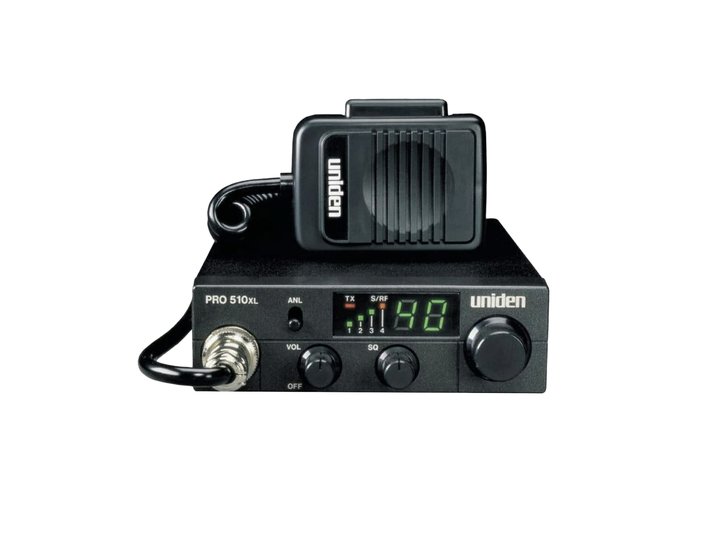
The small CB radio that has been in trucks for decades: 40 channels, a signal meter, and nothing to learn. Needs an antenna and a 12 V connection.
Service
CB (Part 95 subpart D), no licence
Channels
40
Power
CB limit: 4 W AM/FM
Extras
S/RF meter, ANL, PA (listing)
Suits: A truck or a tractor; talking to the road.
Weigh: Uniden publishes almost nothing beyond the channel count. AM only; the 4 W limit is the rule's. A CB is only as good as its antenna, which is a separate purchase and must be tuned.
A 4-watt handheld CB with 40 channels and NOAA, which plugs into a car adapter and an external antenna to become a mobile: one radio for the truck and the campsite.
Service
CB, no licence
Channels
40
Power
4 W
Antenna
BNC removable; mobile adapter included
Batteries
Alkaline (6 × AA, listing) or rechargeable compartment
Weather
NOAA
Suits: Someone who wants CB without a permanent install, or who moves between vehicles.
Weigh: On its own antenna a handheld CB reaches a mile or two; the mobile adapter and a roof antenna are what make it useful. Runs on six AAs or the rechargeable compartment.
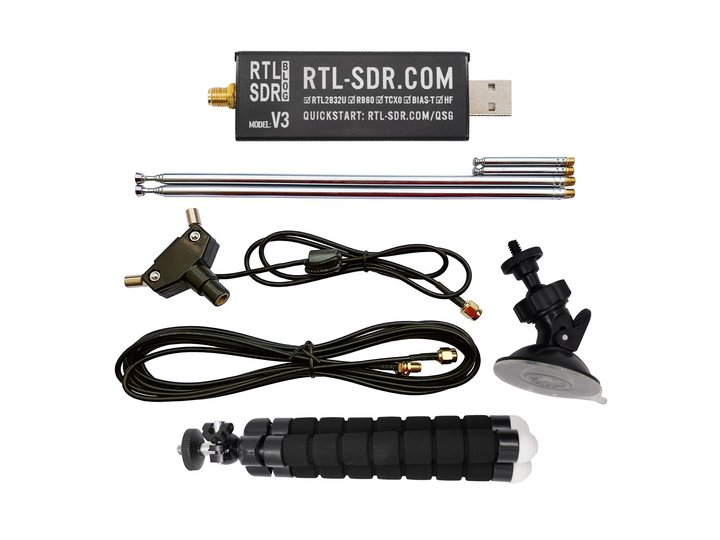
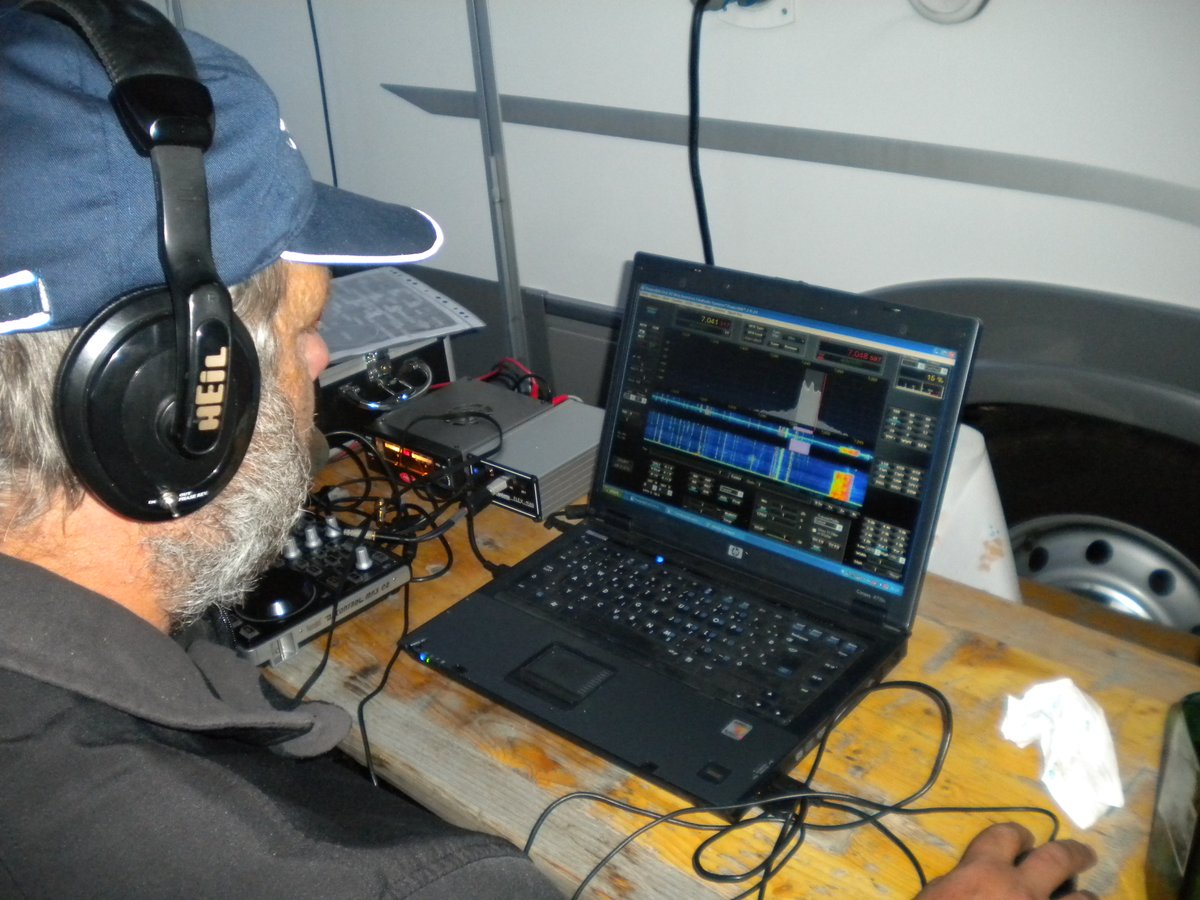
The USB stick that turns a laptop into a receiver from 500 kHz to 1.7 GHz: hear the ham bands, weather, aircraft, and what the scanner crowd hears, with open-source software. This kit adds the maker's dipole antenna set, which is the part the bare dongle lacks.
Range
500 kHz–1.7 GHz (listing)
Bandwidth
3.2 MHz (2.4 MHz stable)
Tuner
R820T2, 1 PPM TCXO
Connector
SMA-female; bias tee
In the box
Dipole antenna kit
Suits: Listening before you can transmit: the week between ordering a radio and passing the exam, and anyone curious what is on the air.
Weigh: Receive only. The newer V4 isn't sold on Amazon under the maker's name (the "V4" listings there are clones); the V3 is the genuine one. HF reception on the V3 uses a direct-sampling mode that is a step down from the V4's.
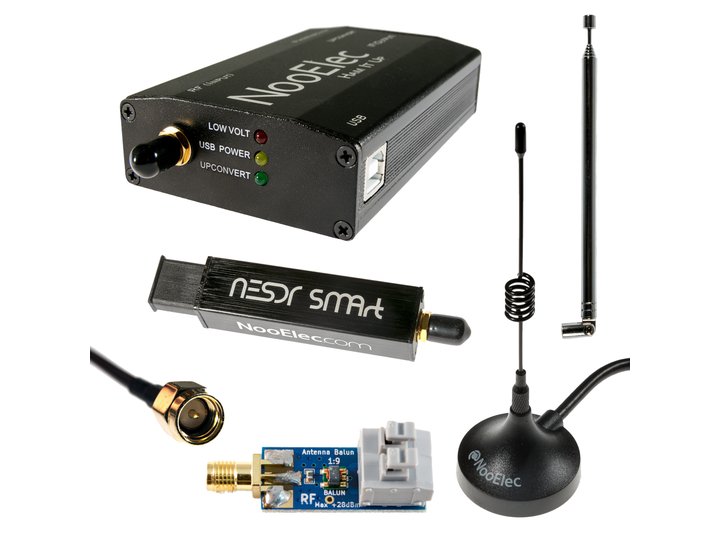
The other well-made RTL-based receiver: an aluminium case that runs cooler, a 0.5 PPM oscillator, and three antenna masts with a magnetic base in the bundle.
Range
0.1–1,750 MHz
Oscillator
0.5 PPM TCXO
Tuner
R820T2 / R860
Case
Aluminium; SMA-female
In the box
3 antenna masts, magnetic base
Suits: The same listening job as the RTL-SDR Blog kit, for someone who prefers the metal case and the included antenna base.
Weigh: The maker doesn't state whether it has a bias tee for powered antennas. Receive only, like every SDR here.
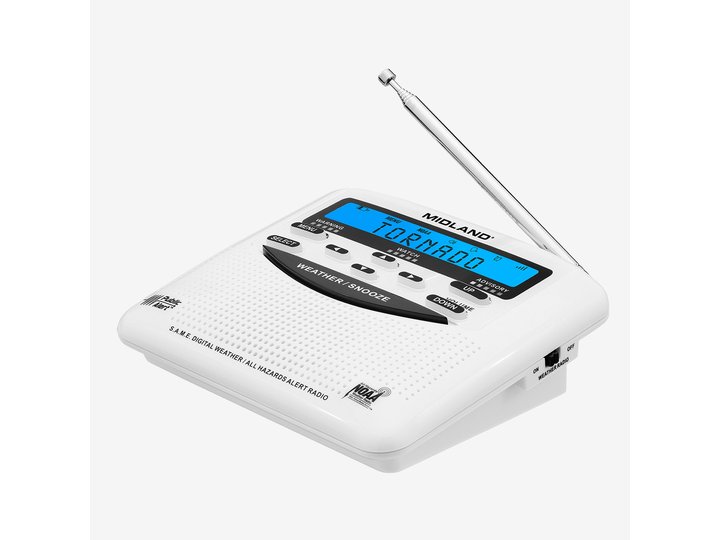
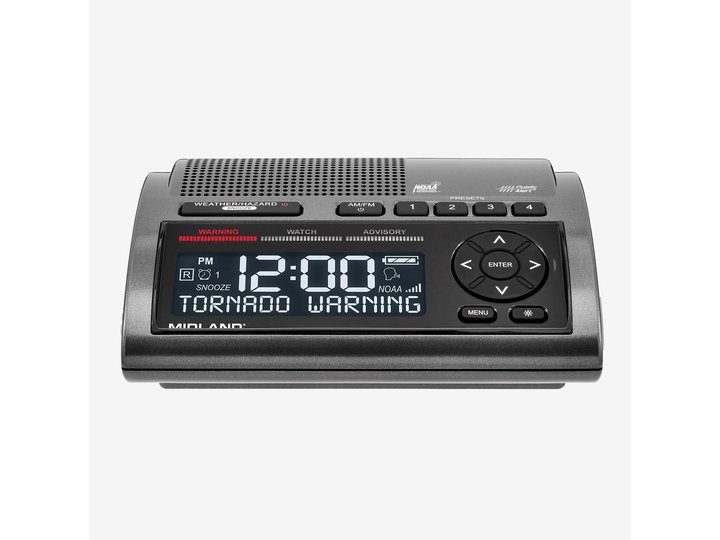
The weather radio for the kitchen counter: it sits silent until the National Weather Service issues a warning for your county, then sounds a 90 dB siren and reads the warning. Programs up to 25 counties, runs on AC with three AAs as backup, Public Alert certified.
Alerts
S.A.M.E., up to 25 counties
Siren
90 dB
Power
AC; 3 × AA backup (not included)
Certification
Public Alert
Suits: Every household in tornado or hurricane country. Ready.gov lists one in the basic kit.
Weigh: Midland's page says both "over 60" and "85+" alert types. The AAs are backup only and aren't included. No AM/FM.
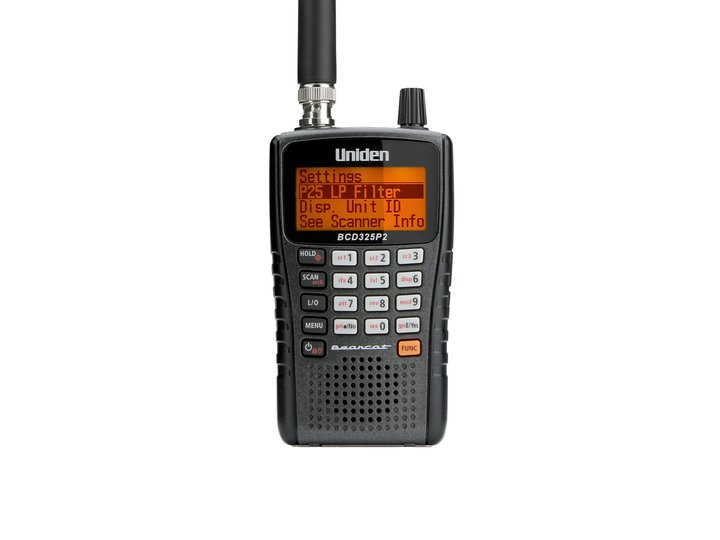
A handheld scanner that follows the digital trunked systems most US police and fire departments use (P25 Phase I and II, Motorola, EDACS, LTR), with 25,000 channels and Close Call, which tunes to whatever is transmitting nearby.
Digital
P25 Phase I/II; Motorola, EDACS, LTR trunking
Channels
25,000
Features
Close Call, S.A.M.E. weather, GPS-based scanning
Not decoded
DMR, NXDN
Weight
16 oz (listing)
Suits: Listening to local public safety where the system is P25 or analog; check RadioReference for your county first.
Weigh: No DMR or NXDN, which some counties and most businesses use. Uniden doesn't publish the frequency coverage or battery details on its page; the listing says 16 oz. Programming a trunked system is real work.
The WR120 with an AM/FM radio, a dual alarm clock, colour alert lights and a USB port to charge a phone: the weather radio that earns a place on the nightstand.
Alerts
S.A.M.E., up to 25 counties; colour LEDs
Siren
Hi / med / lo; 85 dB (listing)
Radio
AM/FM; dual alarm clock
Power
AC; 4 × AA backup; USB charging port
Certification
Public Alert
Suits: The bedroom, where the warning has to wake you.
Weigh: Four AAs for backup rather than three, siren level isn't published by Midland (the listing says 85 dB). Stock on the listing was thin on the check date.
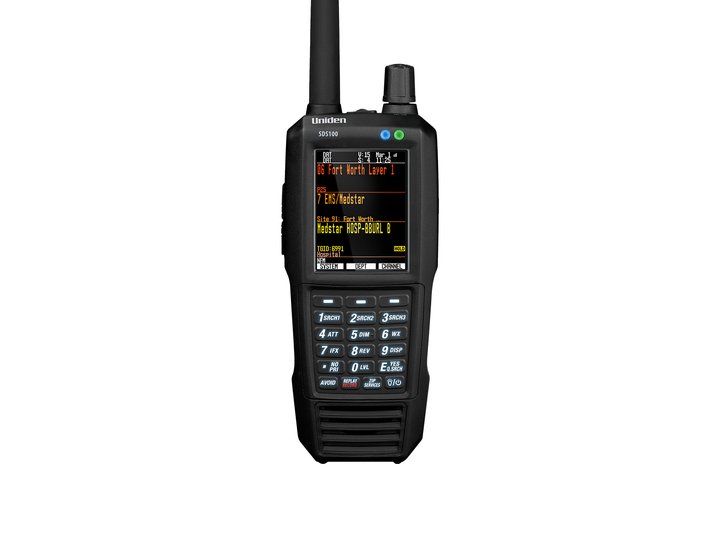
Uniden's top handheld: a true I/Q software-defined receiver that handles simulcast systems the older scanners garble, P25 Phase I and II, a colour display, a splash rating and USB charging.
Receiver
True I/Q SDR
Digital
P25 I/II, X2-TDMA; Motorola, EDACS, LTR
Display
Colour
Rating
JIS4 / IPX4
Charging
USB
Suits: A county on a simulcast P25 system, where cheaper scanners break up.
Weigh: Expensive for a first scanner. DMR and NXDN are paid upgrades, and Uniden's page doesn't state what is included. Coverage, battery and weight aren't published (the listing says 1.5 lb).
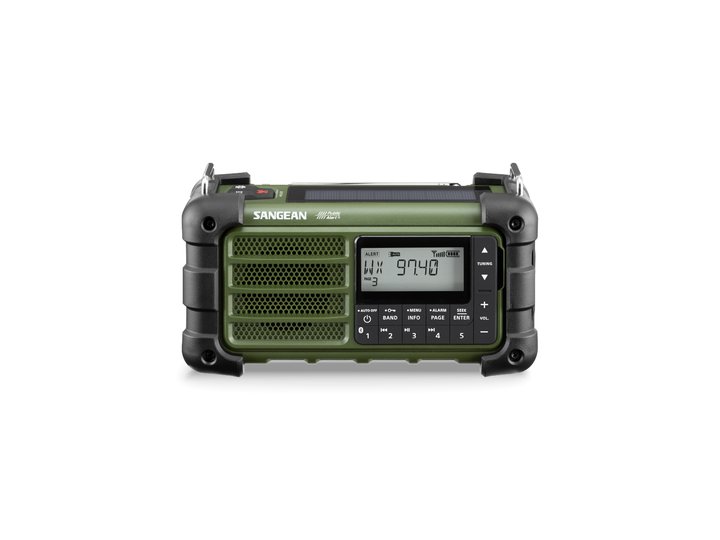
The radio for the hurricane kit: AM/FM and all seven NOAA channels with alerts, charged by hand crank, solar panel or USB-C into a replaceable 2,600 mAh cell, with a USB-A port to charge a phone, Bluetooth, a flashlight, and an IP55 case.
Radio
AM / FM-RDS / 7 NOAA channels with alert; Bluetooth, AUX
Battery
18650 cell, 3.7 V 2,600 mAh, replaceable
Charging
Crank, solar, USB-C
Output
USB-A 5 V / 1 A
Rating
IP55; 202.8 × 113.7 × 89.4 mm; 1 lb 15.7 oz
Suits: The box that gets opened when the power has been out for two days.
Weigh: A crank is a last resort; charge it before the storm. Heavier than the pocket crank radios at nearly two pounds. Public Alert certification isn't stated.
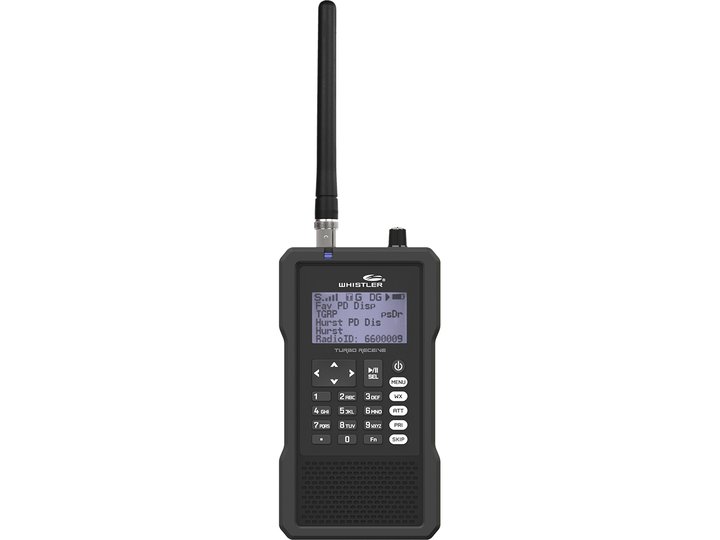
The handheld scanner that decodes DMR and NXDN out of the box as well as P25, and loads the RadioReference database for the US and Canada from a microSD card so you can pick your county rather than type frequencies.
Digital
P25 I/II, X2-TDMA, DMR (Cap+, Con+, XPT), NXDN
Database
RadioReference US/Canada on microSD
Recording
50 h audio
Suits: A county or a business band on DMR or NXDN, which the Unidens don't cover without upgrades.
Weigh: Coverage, battery count and weight aren't published on Whistler's page. Stock on the listing was thin on the check date.
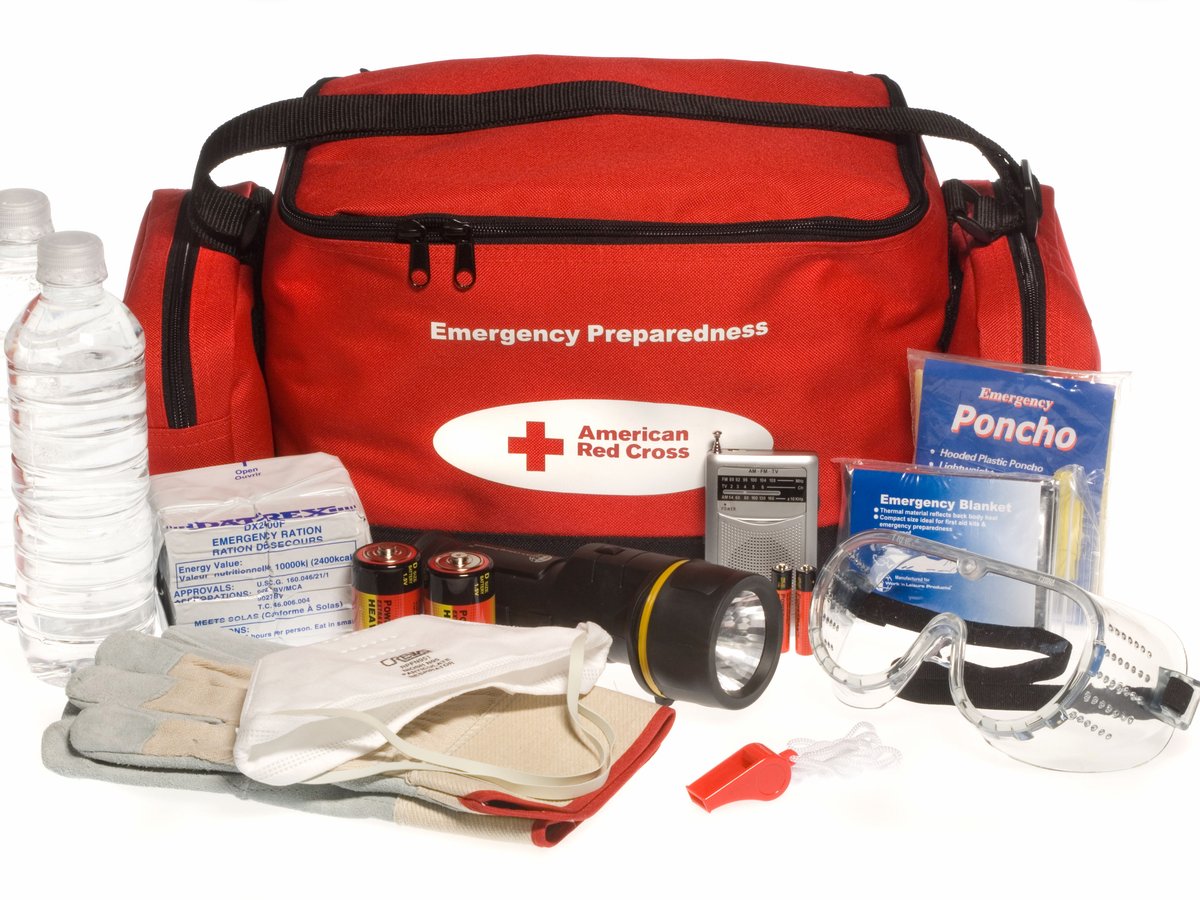
Ready.gov's basic emergency kit lists a battery or hand-crank radio and a NOAA Weather Radio with tone alert. The National Weather Service broadcasts continuously on seven frequencies between 162.400 and 162.550 MHz from more than a thousand transmitters, and a SAME-equipped receiver programmed with your county code turns on for warnings in your county only, with a 1050 Hz tone followed by the message. Coverage is about 40 miles from a transmitter on level ground. A plug-in alert radio on the nightstand and a crank radio in the kit cover both halves: the warning before, and the news after.
Scanners need a county check before buying: look up your county on RadioReference and see whether public safety is on P25, DMR or NXDN, because the Unidens decode P25 and the Whistler decodes all three. And remember that a scanner in a car is restricted in some states; check yours.