Product links on this page go to Amazon. If you buy through them, Your First Radio earns a commission. How we pick and earn
After a hurricane the cell network is the first thing to go and the last to come back. The radio half of the kit does three jobs: the warning before, the news after, and talking to the people you care about in between. Three radios, none of which need an exam.
What Ready.gov says
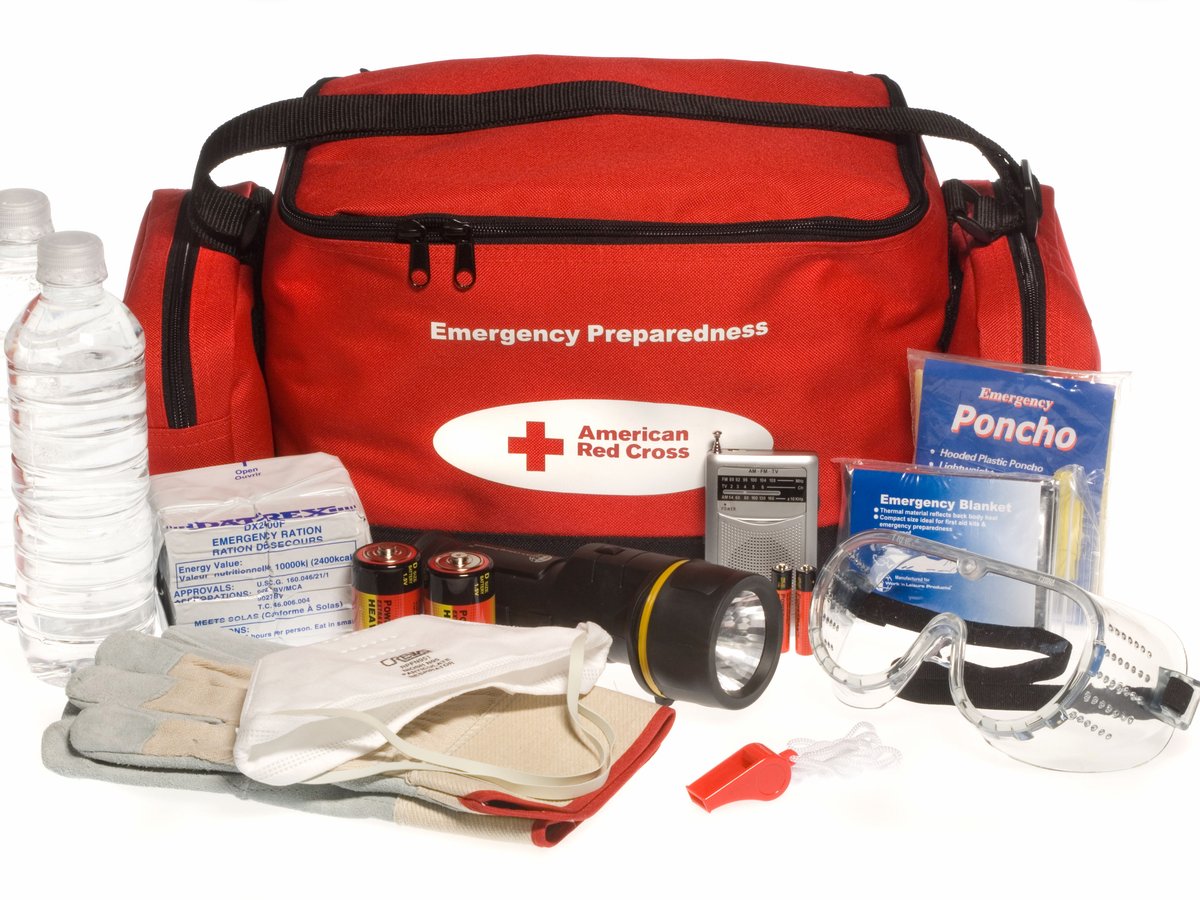
The basic emergency kit on Ready.gov includes a battery-powered or hand-crank radio and a NOAA Weather Radio with tone alert. That’s two of the three; the third is the one Ready.gov leaves to you.
The warning: a SAME weather alert radio
NOAA Weather Radio broadcasts continuously on seven frequencies from 162.400 to 162.550 MHz, from more than a thousand transmitters covering all fifty states. Any weather radio hears it. What makes an alert radio worth owning is SAME: you program your county’s code, and the radio stays silent until the Weather Service issues a warning for that county, then turns itself on with a 1050 Hz tone and reads the warning. Coverage is about 40 miles from a transmitter on level ground, so most of Florida is inside one.
Program it the day it arrives: the county code is on weather.gov, the radio asks for it once. Put it where it will wake you.
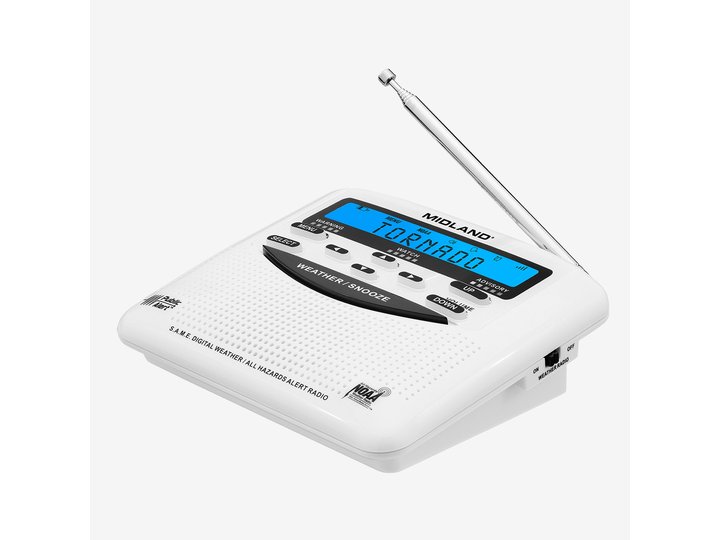
NOAA weather radio with SAME alerts
Midland WR120B weather alert radio
Midland WR120B
The weather radio for the kitchen counter: it sits silent until the National Weather Service issues a warning for your county, then sounds a 90 dB siren and reads the warning. Programs up to 25 counties, runs on AC with three AAs as backup, Public Alert certified.
- Alerts
- S.A.M.E., up to 25 counties
- Siren
- 90 dB
- Power
- AC; 3 × AA backup (not included)
- Certification
- Public Alert
Suits: Every household in tornado or hurricane country. Ready.gov lists one in the basic kit.
Weigh: Midland's page says both "over 60" and "85+" alert types. The AAs are backup only and aren't included. No AM/FM.
The news: a crank radio
When the power has been out for two days, the phone is dead and the car is low on gas, a radio with a hand crank and a solar panel is how you hear which roads are open and where the ice is. The Sangean MMR-99 has AM, FM and all seven weather channels, charges by crank, sun or USB-C into a replaceable cell, and charges a phone from its USB port. Charge it full when the storm enters the forecast; the crank is the backup to the backup.
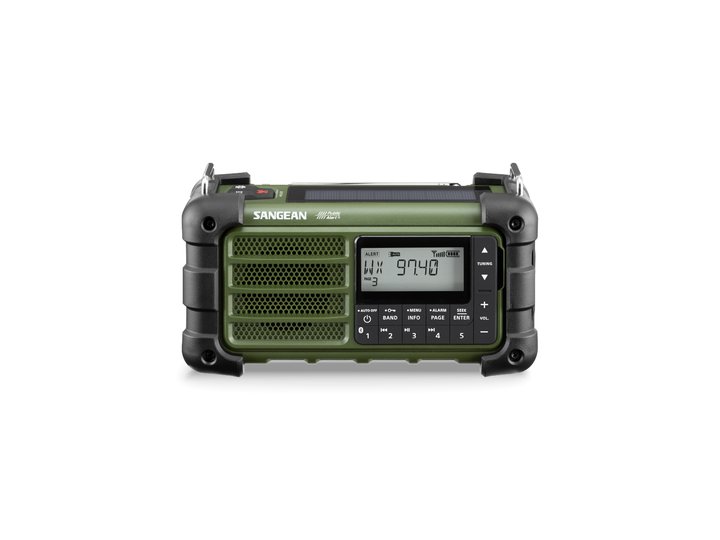
Crank, solar and USB-C emergency radio
Sangean MMR-99 emergency radio
Sangean MMR-99
The radio for the hurricane kit: AM/FM and all seven NOAA channels with alerts, charged by hand crank, solar panel or USB-C into a replaceable 2,600 mAh cell, with a USB-A port to charge a phone, Bluetooth, a flashlight, and an IP55 case.
- Radio
- AM / FM-RDS / 7 NOAA channels with alert; Bluetooth, AUX
- Battery
- 18650 cell, 3.7 V 2,600 mAh, replaceable
- Charging
- Crank, solar, USB-C
- Output
- USB-A 5 V / 1 A
- Rating
- IP55; 202.8 × 113.7 × 89.4 mm; 1 lb 15.7 oz
Suits: The box that gets opened when the power has been out for two days.
Weigh: A crank is a last resort; charge it before the storm. Heavier than the pocket crank radios at nearly two pounds. Public Alert certification isn't stated.
Talking: a GMRS pair
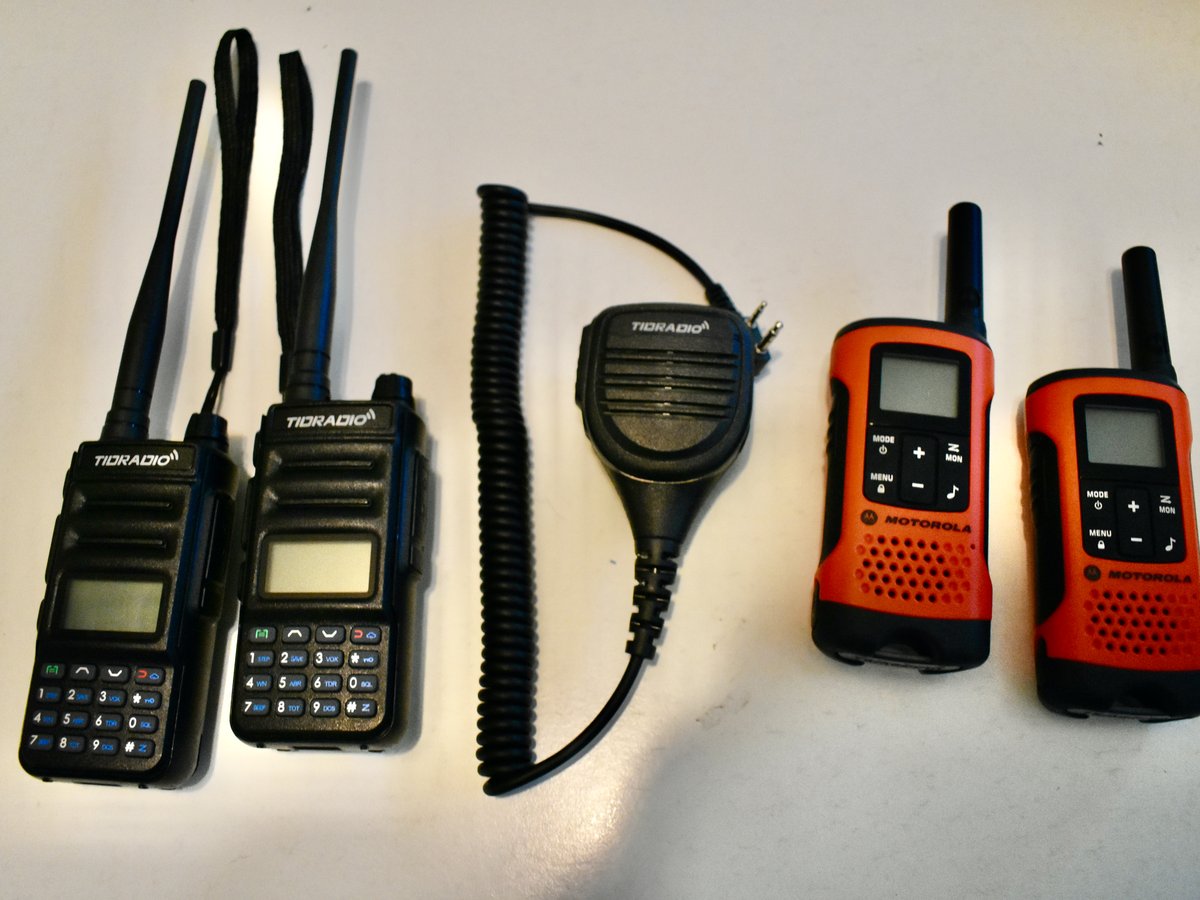
The kit radio nobody lists is the one that lets two people talk. FRS walkie-talkies reach a mile or two; a pair of 5-watt GMRS handhelds reaches across a neighbourhood, and through a repeater, if one survives, across a county. The licence is $35, no exam, and covers the whole family (47 CFR 95.1705). Both radios on the same channel and code, written on a card in the kit, charged, with a USB-C cable and a power bank beside them.
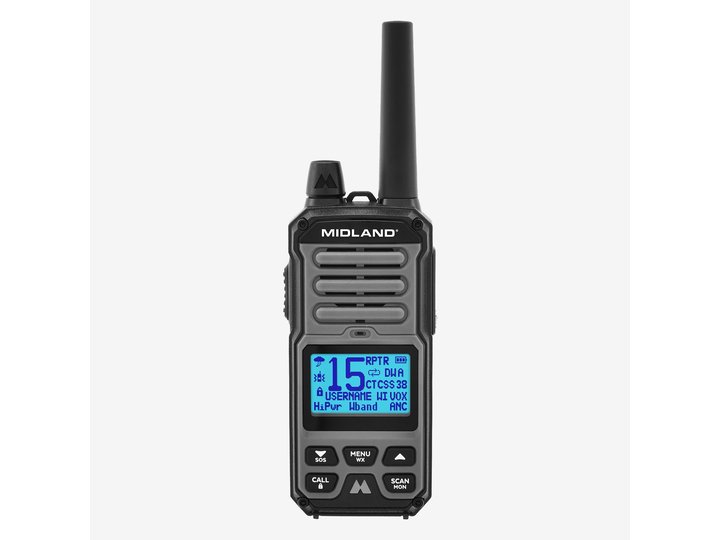
5 W GMRS handheld, repeater capable
Midland GXT67 Pro
Midland GXT67 Pro
Midland's current GMRS handheld: 5 watts, the 22 standard channels plus 8 repeater channels, an IP67 case, NOAA weather alerts and USB-C charging, built to be handed to someone who has never used a radio.
- Power
- 5 W
- Channels
- 22 GMRS/FRS + 8 repeater
- Rating
- IP67
- Charging
- USB-C compatible, about 4 h
- Weather
- NOAA alert
- Weight
- 9.6 oz (listing)
Suits: The family radio: a parent, a teenager, a hunting partner, a hurricane kit.
Weigh: Midland doesn't publish the battery capacity or the certification number on the product page. No Bluetooth or app; programming the repeater tones takes a separate cable or the keypad.
A 50-watt GMRS mobile in the truck extends that to across town, and a ham licence adds the ARES volunteers who pass traffic for shelters and hospitals when everything else is down. Both are later; the three above are the kit.
The checklist
- Weather alert radio programmed with your county, on the nightstand, batteries in the backup slot.
- Crank radio charged full, in the kit, with a phone cable.
- Two GMRS handhelds charged, same channel, card with the channel and code, USB-C cable, power bank.
- Everything tested the week the season starts, in June.
The GMRS guide covers the licence; the personal radio page has every radio above.