Product links on this page go to Amazon. If you buy through them, Your First Radio earns a commission. How we pick and earn
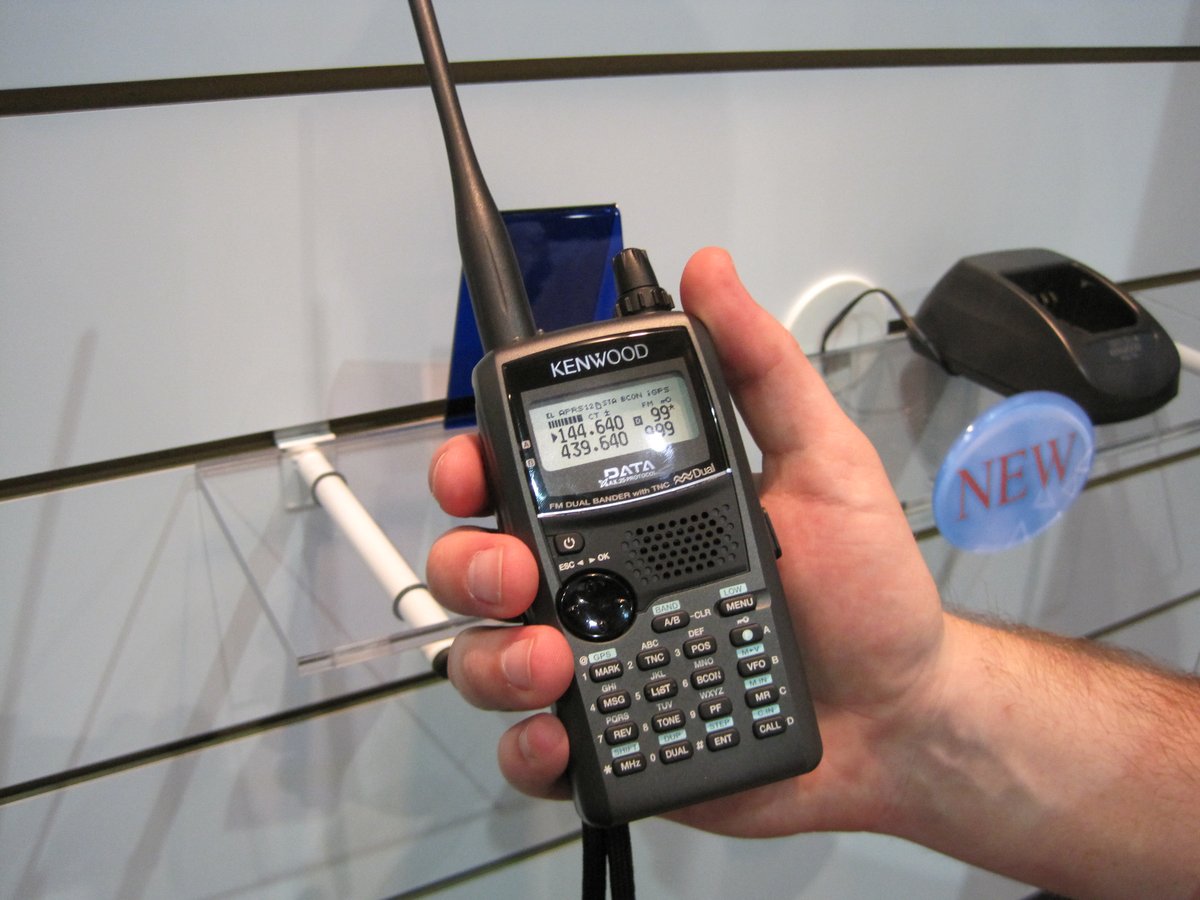
A handheld on its own reaches a few miles. A handheld through a repeater reaches a county. The first week of ham radio is learning how that works, and getting an antenna that doesn’t waste the five watts you paid for.
What a repeater is
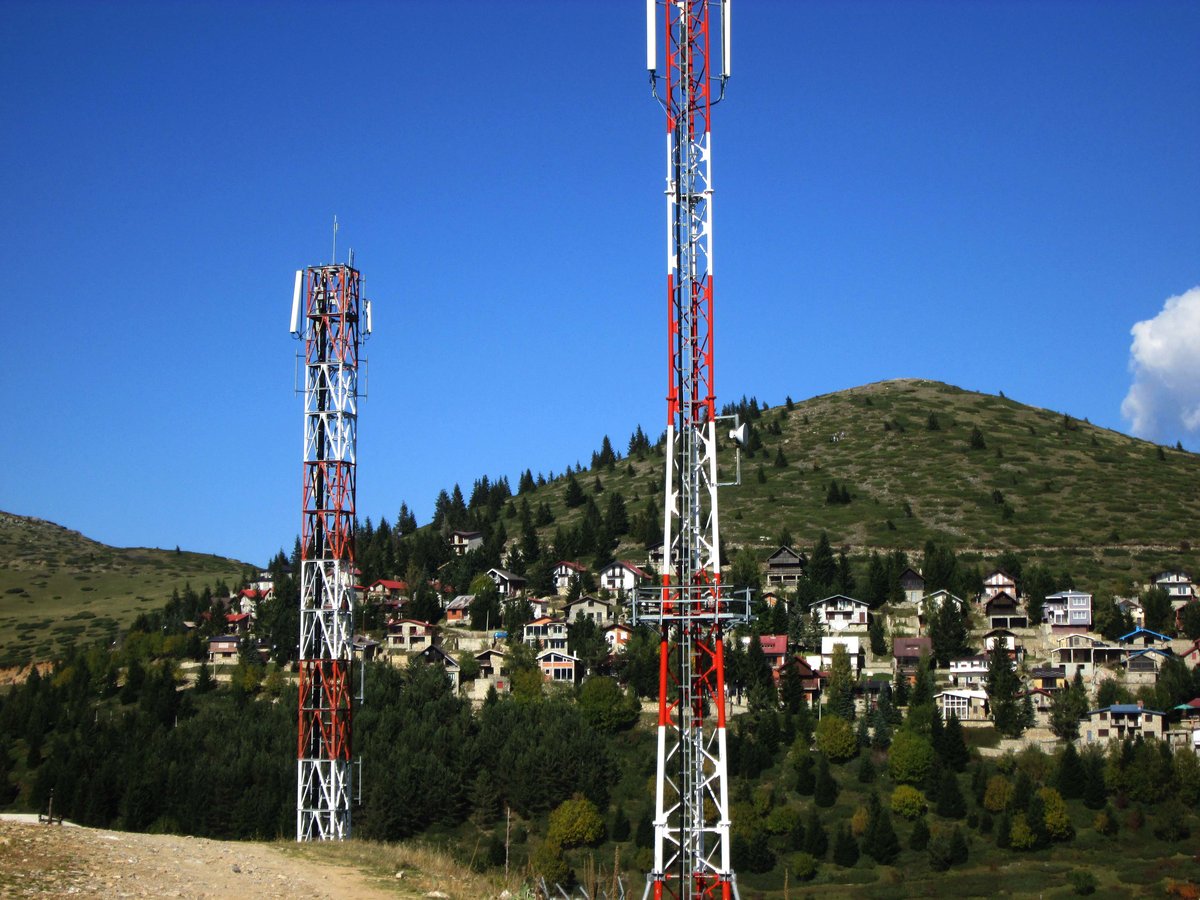
A repeater is a radio on a tower that listens on one frequency and re-transmits on another, at height and with power. You transmit up to it on its input, everyone in range hears you on its output. Most towns have several, run by clubs, and most are open to anyone licensed.
Three numbers program one:
- The output frequency, which is what’s listed.
- The offset: on 2 metres it is plus or minus 600 kHz, on 70 centimetres plus or minus 5 MHz. These are the standards the Technician pool asks about, and radios apply them automatically once you set the direction.
- The tone: most repeaters require a CTCSS tone, a sub-audible tone sent with your voice that opens the repeater’s squelch, so it ignores noise. The listing gives it (often written “PL 100.0” or similar).
RepeaterBook is the directory: pick your state and county and it lists every repeater with its frequency, offset and tone, and CHIRP can import the list straight into the radio.
The simplex frequency
Radio to radio, with no repeater, is simplex. The 2-metre FM calling frequency in the US is 146.520 MHz: the place to call when you want to find someone nearby without a repeater, and the channel to program first for a hurricane kit, because repeaters lose power too.
Your first call
Listen for a few days. Then, when the repeater is quiet, key up and say your callsign and “listening” or “monitoring”. That’s the whole protocol. Someone will usually come back, and the first conversation is about your radio, your antenna and where you are, which is the one subject you’re already an expert on.
SWR, in two paragraphs
An antenna that matches the radio reflects almost nothing back; one that doesn’t reflects a lot, and the radio cuts its power to protect the output transistors. SWR is the ratio: 1:1 is a perfect match, and the makers of the antennas here publish 1.5:1 or better as their spec. A reading climbing past 2:1 means something is wrong with the antenna, the coax or the ground plane.
A small digital meter between the radio and the antenna shows it. Check every new antenna install once; after that, forget about it until something changes.
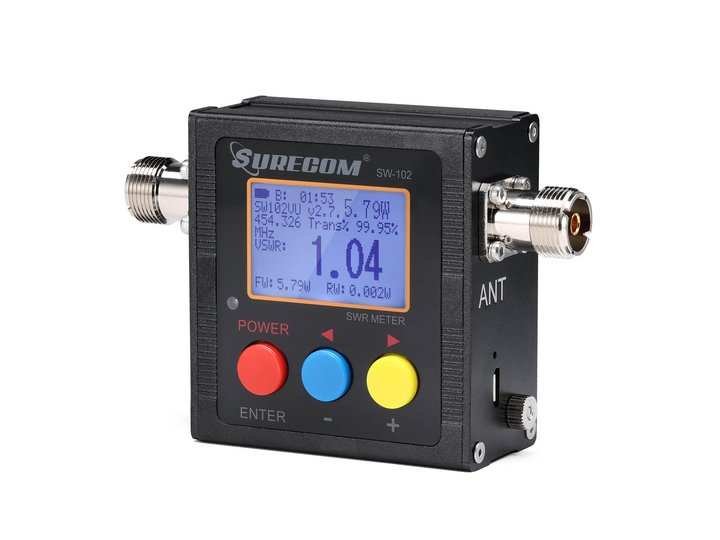
Digital SWR / power meter, VHF/UHF
Surecom SW-102 SWR and power meter
Surecom SW-102
A small digital meter that sits between the radio and the antenna and shows forward power, reflected power and SWR: the tool that tells you whether a new antenna is working before you transmit through it for an hour.
- Range
- 125–525 MHz
- Reads
- Forward, reflected, VSWR
- Insertion loss
- ≤ 0.3 dB (listing)
- Connectors
- SMA
Suits: Checking a magnet mount or base antenna install. The first test instrument most hams buy.
Weigh: Analog FM only; it doesn't read DMR correctly. No maker page, so the specs are the listing's. SMA connectors on this version; the SW-102S has SO-239s.
The antenna is the radio
The stock antenna on a handheld is built to be short. Three upgrades, in order of how much they do:
- A longer whip on the handheld. The Nagoya NA-771 is the standard. Buy the real one.
- A magnet mount on the car roof. Steel roof under it, 13 feet of coax to the radio, an adapter to the handheld’s SMA socket. The Nagoya UT-72 is the usual first one, and it works with a mobile radio later.
- A base antenna at height. The Diamond X50A on a mast or chimney mount, fed with RG-8X for a short run, turns a 5-watt handheld into something that hears the whole metro, and a 50-watt mobile into a base station.
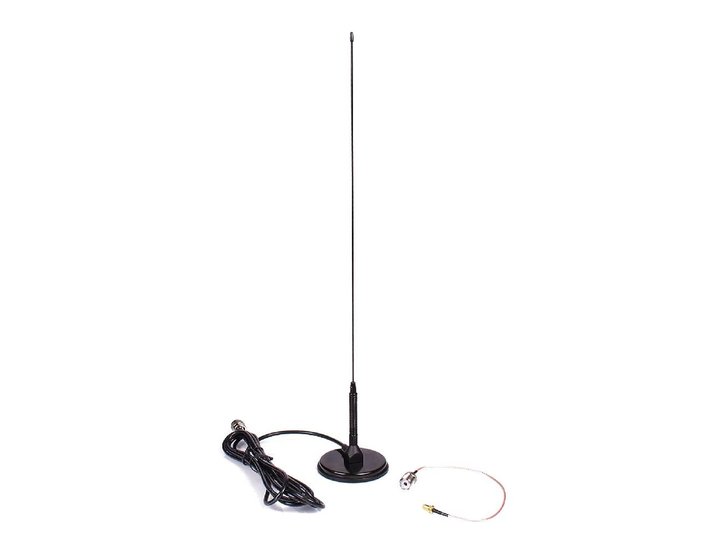
Car magnet-mount antenna
Nagoya UT-72 magnet mount
Nagoya UT-72
A 20-inch dual-band whip on a 3.25-inch magnet with 13 feet of coax and an adapter for a handheld's SMA socket: the lowest-cost real improvement to a handheld in a car.
- Bands
- 144 / 430 MHz
- Length
- 20.27 in
- Gain
- 1.7–3.5 dBi (maker)
- Cable
- 13 ft RG-58A/U, PL-259 + SO-239-to-SMA-F adapter
- Power
- 80 W; VSWR ≤ 1.5
- Magnet
- 3.25 in
Suits: Using a handheld from the car, and the first antenna for a mobile radio.
Weigh: Needs a steel roof under the magnet as a ground plane; it won't work on aluminium or fibreglass. Rated 80 W, which covers any mobile here.
Gain figures on antennas come in dBi and in bare “dB”, and makers don’t always say which; compare an antenna’s numbers only with the same maker’s. A 19-inch vertical on 2 metres is a quarter-wave, and a 5/8-wave whip has more gain than a quarter-wave, which is as far as the Technician pool goes and as far as a beginner needs to.
The mobile step
When the handheld stops being enough, the step is a 50-watt mobile, a roof antenna and, at home, a power supply: the Icom IC-2730A and the Powerwerx SS-30DV. Put Powerpoles on everything and the shack grows without re-wiring.
Back to the ham radio page for every product above.